
Root Canal Therapy in Pensacola, FL
Advanced endodontic care that saves your natural teeth — relieving pain today while preserving your smile for tomorrow.
Tooth pain that throbs through the night, a jaw that aches when you bite down, or a gum that swells without warning — these are your body’s signals that something is wrong deep inside a tooth. Root canal therapy stops that pain at its source, removes the infected pulp, and saves a tooth that would otherwise be lost. Most patients are surprised to discover the procedure is no more uncomfortable than a routine filling.
At Coastal Cosmetic and Family Dentistry, Dr. William Rolfe and Dr. Emily Hébert provide root canal therapy as part of their comprehensive restorative dentistry in Pensacola. As LSU School of Dentistry graduates with advanced training in full-arch rehabilitation and occlusion through the Dr. Dick Barnes Group in Salt Lake City, both doctors bring a thorough, systematic approach to endodontic treatment. Their goal is the same on every case: relieve your pain, save your natural tooth, and restore full function so your smile can last a lifetime.
Do You Need Root Canal Therapy?
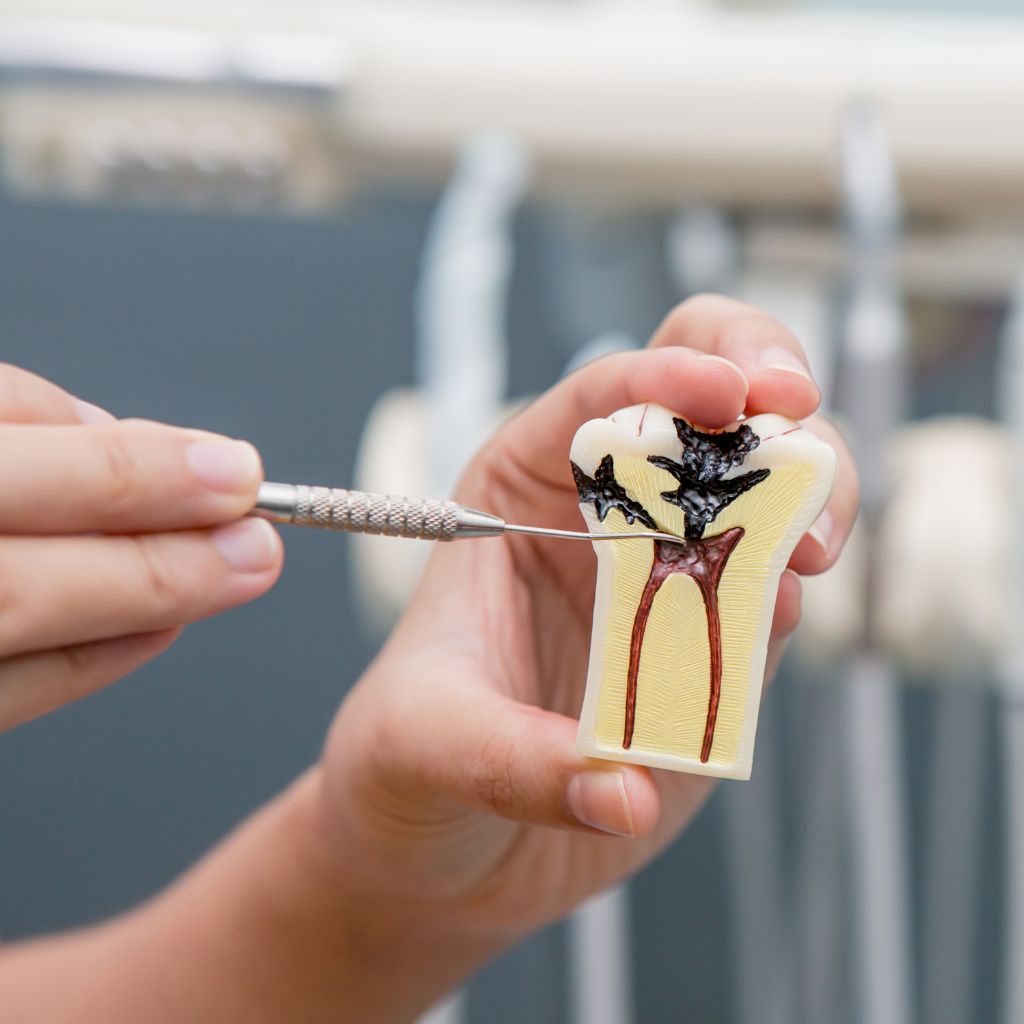
Root canal therapy is necessary when the dental pulp — the soft tissue of nerves, blood vessels, and connective tissue inside your tooth root — becomes infected or irreversibly damaged. Tooth pulp can be compromised by deep decay, trauma, a fracture, or repeated dental procedures on the same tooth. Left untreated, a pulp infection spreads to surrounding bone, affects neighboring teeth, and can enter the bloodstream.
Several warning signs indicate that infected pulp may be present. Persistent pain that wakes you at night or intensifies when you bite down is one of the most common. Temperature sensitivity that lingers after removing the hot or cold stimulus, a darkened or discolored tooth, swelling or tenderness in the gums around a tooth, and a small pimple-like fistula on the gum are all signs that warrant prompt evaluation. In some cases, the nerve dies quietly, and the only indication is a routine X-ray showing infection at the tooth root.
Prompt treatment matters. A 2023 study published in Clinical Oral Investigations found cumulative tooth survival rates of 97% at 10 years and 81% at 20 years following primary root canal treatment — outcomes that depend on timely intervention before infection spreads.
Ready to Relieve Your Tooth Pain?
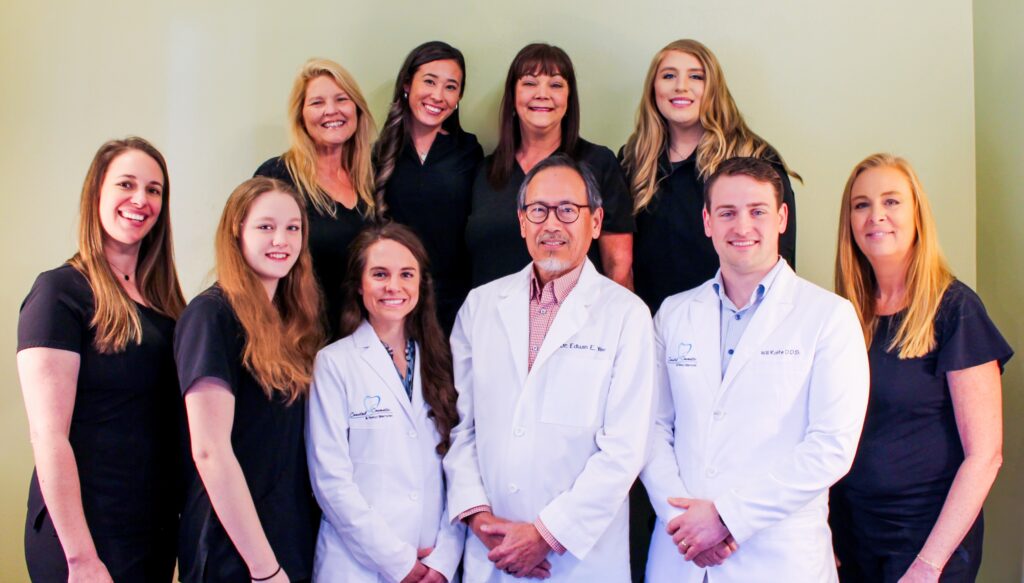
Meet Dr. Rolfe and Dr. Hébert
Dr. William Rolfe and Dr. Emily Hébert bring a patient-centered approach to every root canal case at Coastal Cosmetic and Family Dentistry. Both are LSU School of Dentistry graduates with comprehensive training in occlusion and full-arch rehabilitation through the Dr. Dick Barnes Group in Salt Lake City, Utah. That foundation means they treat root canal therapy not as an isolated procedure but as part of a complete restorative plan — coordinating the endodontic treatment and crown restoration together so every step builds toward a lasting result.
Dr. Rolfe takes particular interest in the precision required in endodontic cases, often pairing root canal treatment with build-ups and porcelain or zirconia crown restorations in a coordinated plan. Dr. Hébert’s thorough approach to diagnosis and treatment ensures that infection is fully resolved before the final restoration is placed. Together, they have helped patients across Pensacola, Gulf Breeze, Ensley, Warrington, and Ferry Pass save teeth they feared might be lost.
Benefits of Root Canal Therapy
Natural Tooth Preservation
Saving your natural tooth preserves the integrity of your jawbone and keeps neighboring teeth from shifting out of alignment. A root canal-treated tooth looks, feels, and functions like any other tooth in your mouth. Nothing replaces the strength and sensation of a tooth you were born with.
Long-Term Cost Savings
The real cost of waiting is almost always higher than the cost of treating a tooth today. A root canal now is far less expensive than the extraction, bone grafting, and dental implant or dental bridge that follows tooth loss. Most dental insurance plans cover root canal therapy at 50–80% after your deductible. For patients without insurance, our in-house dental savings plan and flexible financing options help make care accessible.
Restored Function
After your root canal and crown are placed, the tooth functions like any other healthy tooth. Resume normal brushing and flossing right away, and schedule regular dental exams and cleanings to protect both the restored tooth and the rest of your smile. With proper care, a root canal-treated tooth can last for decades.
Ready to Schedule Your Visit?
Now Accepting New Hygiene Patients
What the Root Canal Procedure Involves
A root canal procedure at our Pensacola office follows a precise, step-by-step process designed for your comfort throughout.
We begin by thoroughly numbing the area around the tooth with a local anesthetic. For patients with dental anxiety, we also offer sedation options including nitrous oxide and oral conscious sedation. Once you are fully comfortable, a dental dam is placed around the tooth to isolate the area and keep it clean during treatment.
A small opening is made in the crown of the tooth to access the pulp chamber and root canals. Precise instruments are then used to remove the infected pulp, clean the interior of each canal, and shape the canals to receive a filling. The space is disinfected thoroughly, then sealed with gutta-percha — a biocompatible rubber-like material — to prevent reinfection. A temporary filling closes the tooth while a permanent porcelain or zirconia crown is fabricated to protect and restore full function. Most of our root canal treatments are completed in a single visit. Complex cases may require two appointments.
After Your Root Canal: What to Expect
Comfort During Treatment
Mild soreness around the treated tooth for two to three days is normal and responds well to over-the-counter anti-inflammatory medication like ibuprofen. The tooth will no longer experience temperature sensitivity, because the nerve has been removed. Avoid chewing on the treated side until your permanent crown is placed.
When to Seek Care
Do not wait for tooth pain to become unbearable. A dental infection left untreated spreads to surrounding bone and neighboring teeth, and may ultimately require extraction. The sooner infected pulp is removed, the simpler and more predictable the treatment outcome. If you are experiencing any warning signs — persistent pain, swelling, a darkened tooth, or temperature sensitivity that lingers — contact our Pensacola office promptly.
Insurance and Financing
Most dental insurance plans classify root canal therapy as a major restorative procedure, covering 50–80% of the cost after your deductible. We accept all insurances and will verify your coverage before treatment begins. Patients without insurance can access our in-house dental savings plan and flexible financing options to make care affordable.
Frequently Asked Questions About Root Canal Therapy
Is root canal treatment painful?
Modern root canal treatment is no more painful than routine fillings. We use advanced anesthesia techniques including electronic delivery systems controlling injection speed. During treatment you feel pressure but no pain. Afterward, mild tenderness lasting 2-3 days is normal and managed with ibuprofen. We offer sedation for anxious patients.
How much does root canal therapy cost in Pensacola?
Root canal treatment costs $800-1,200 for front teeth, $900-1,400 for premolars, and $1,200-1,800 for molars. Most insurance covers 50-80% as medically necessary major work. Total treatment includes crown ($1,000-1,800) to protect treated tooth. We verify insurance benefits and have in-house membership plans available.
What is the root canal process like?
Root canal treatment requires 1-2 appointments lasting 60-90 minutes. We anesthetize the tooth, access canal system, remove infected pulp, clean and shape canals, fill with gutta-percha, and place temporary filling. Most return to normal activities immediately. Follow-up involves placing permanent crown to protect treated tooth. Entire process from treatment to crown spans 2-4 weeks.
How long does a root canal last?
Root canal-treated teeth can last a lifetime with 95%+ success rates when crowned promptly. Keys to longevity include placing crown within 2-3 months, excellent oral hygiene, regular checkups, avoiding extremely hard objects, and addressing crown defects promptly. We monitor treated teeth at checkups using X-rays to verify healing.
What are the alternatives to root canal treatment?
The only alternative is extraction followed by implant ($4,000-6,000), bridge ($2,500-5,000), or partial denture ($1,200-2,800)—all exceeding root canal investment. Natural teeth function better, maintain jawbone density, and eliminate ongoing replacement costs. Extraction appropriate when extensive damage or severe gum disease compromises long-term prognosis.
What Our Customers Say
Root Canal Therapy at Coastal Cosmetic and Family Dentistry
Dr. William Rolfe and Dr. Emily Hébert bring a patient-centered approach to every root canal case at our Pensacola practice. With comprehensive training in occlusion and restorative dentistry through the Dr. Dick Barnes Group in Salt Lake City, they coordinate root canal therapy with crown restoration as a complete treatment — not two separate procedures. Their thorough technique and gentle care have helped patients throughout Pensacola, Gulf Breeze, Ensley, Warrington, and Ferry Pass preserve teeth they feared might be lost.
If you have been experiencing tooth pain, sensitivity, or swelling, do not wait for it to worsen. Contact our team at Coastal Cosmetic and Family Dentistry to schedule your free consultation today. You can also explore our root canal therapy guide for a deeper look at what to expect before, during, and after treatment.
- 6160 N Davis Hwy #6, Pensacola, FL 32504, United States
- 850-479-3355
- Mon, Tue, Wed, Thu: 7:30am-3pm, Sat-Sun Closed
Ready to Schedule Your Visit?
Now Accepting New Hygiene Patients