

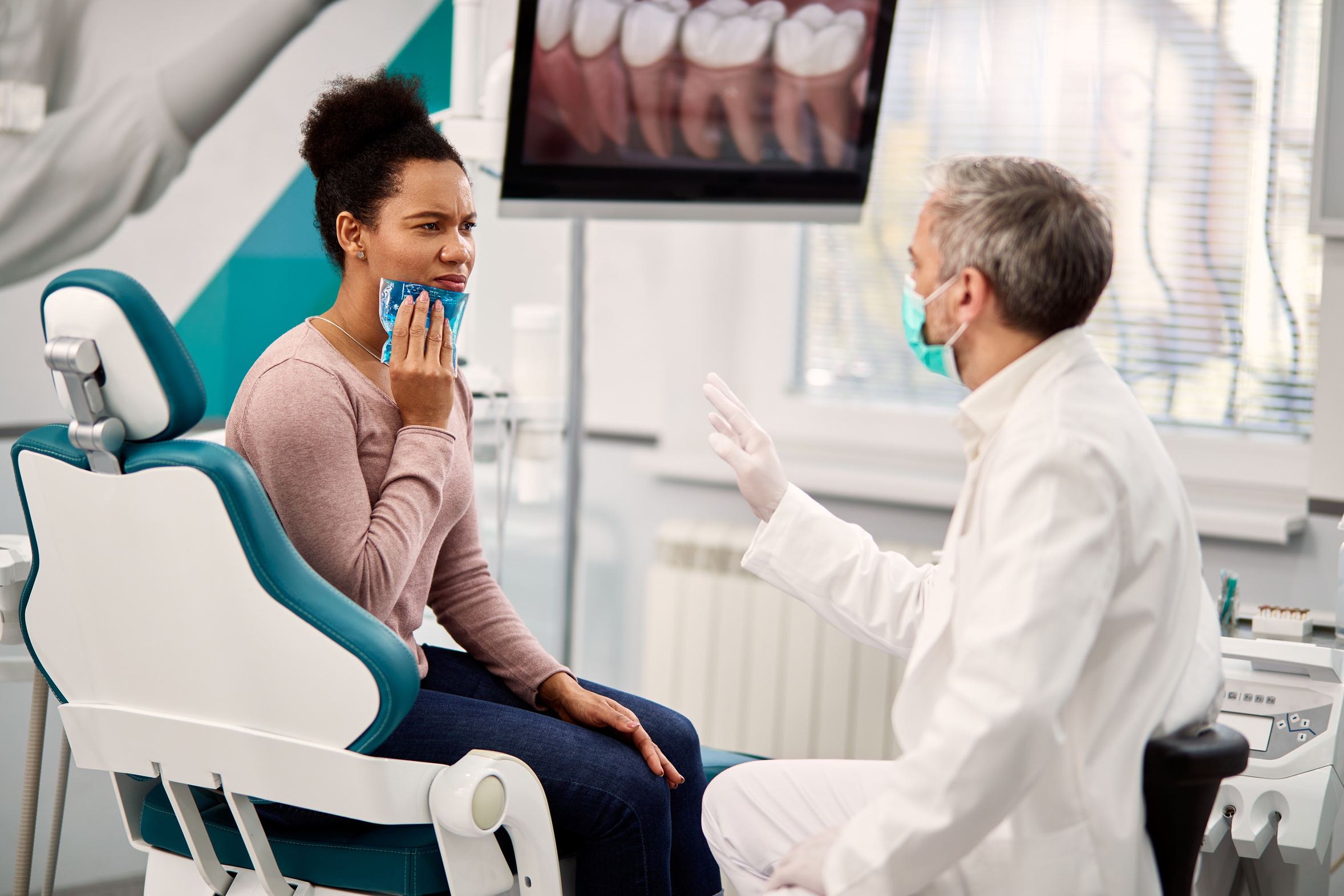
Jaw pain tends to show up in ordinary moments, like biting into a sandwich, yawning in the car, or waking with a sore face. Often the source is the temporomandibular joint, the hinge on each side of your face that connects your lower jaw to your skull, and a dentist can help you sort out what is behind the ache and which steps to try first.
If your jaw has been bothering you, Coastal Cosmetic and Family Dentistry can help you figure out what is going on. We look at your teeth, gums, and bite, then talk through next steps for TMJ pain.
What Is TMJ Pain?
TMJ pain is discomfort in or around the jaw joint, and it often involves the muscles you use to chew. Doctors use “TMJ” for the joint itself and “TMD” for the group of conditions affecting it. The National Institute of Dental and Craniofacial Research reports these disorders affect about 5% of adults in the United States and are roughly twice as common in women as in men.
Many cases are short-lived and settle down on their own, though a TMD can also appear alongside headaches, back pain, or sleep problems, which can make the cause harder to pinpoint. Still, pain that keeps returning, trouble opening your mouth, or a jaw that locks deserves a closer look from a dentist or doctor.
What Causes TMJ Pain?
There is not always one clear cause of TMJ pain. An injury to the joint can lead to symptoms, while research also points to factors such as genetics, stress, and differences in how people experience pain. In some cases, symptoms begin without an obvious trigger, which can make an exam important for ruling out other sources of jaw discomfort.
Certain habits may also put more strain on the jaw. Clenching, grinding, frequent gum chewing, and nail biting can keep the jaw muscles working when they would otherwise be at rest. Research does not support blaming TMD on a bad bite or braces alone. During an exam, a dentist can also look for signs of grinding, such as worn or chipped teeth. If grinding has already damaged a tooth, restorative dentistry may be needed to repair it.
Symptoms to Watch For
TMD can feel different from one person to the next. Some symptoms affect the jaw itself, while others can show up around the face, neck, or ears. Signs can include:
- Jaw or facial pain: Soreness around the jaw joint or chewing muscles that may spread into the face or neck
- Locking or limited movement: A jaw that catches or does not open or close fully
- Painful clicking or popping: Joint noises accompanied by discomfort or a grating sensation when you open and close your mouth
- A changed bite: Upper and lower teeth that suddenly seem to fit together differently
Clicking or popping without pain is common and does not always require treatment. Jaw and facial pain can also have other causes, including a cracked tooth or infection, so symptoms alone cannot tell you if TMD is responsible. If your jaw locks or you suddenly cannot open or close your mouth normally, contact a dentist or doctor promptly.
How Can a Dentist Help Treat TMJ Pain?
No single test confirms a TMD, so diagnosis begins with a conversation. During a dental exam, we may ask where and when the pain occurs, check your jaw muscles for tenderness, and look at your teeth for wear. Simple steps often come first, such as softer foods, heat or cold on the sore area, jaw stretches, and easing habits such as clenching and gum chewing. Over-the-counter pain relievers may help if used as directed.
When grinding or clenching seems involved, a custom nightguard may protect your teeth, though research on how well it eases TMD pain is limited. It should never permanently change your bite, and you should stop wearing it if it causes pain. If symptoms continue, care can involve other health care providers, such as physical therapists, and it is wise to get a second opinion before any treatment that cannot be undone.
Bring Your Jaw Pain Questions to Coastal Cosmetic and Family Dentistry
If jaw pain keeps coming back or is making it harder to eat, work, or sleep, it may be time to have it checked. Our doctors can examine your jaw, teeth, and bite to look for factors that may be contributing to the discomfort. Dr. Rolfe is a member of the Academy of General Dentistry and the American Dental Association, and Dr. Hébert brings experience from four years of caring for patients in North Louisiana after earning her dental degree from Louisiana State University School of Dentistry.
We welcome patients with any dental insurance plan, although we may not be in-network with every insurance provider. We also offer financing through Sunbit and CareCredit. If you would like to find out what may be behind your jaw pain, reach out to our team through our contact form to schedule a visit.