When a tooth has too much damage for a filling but not quite enough to need a full crown, the solution is often an inlay or onlay. These restorations sit in a middle ground that many patients don’t know exists, and for the right situation, they deliver results that neither a filling nor a crown can match quite as well.
At Coastal Cosmetic and Family Dentistry in Pensacola, inlays and onlays are part of a broader restorative dentistry approach that aims to preserve as much natural tooth structure as possible. Understanding how these restorations differ and when each one applies can help you make sense of a recommendation if it comes up at your next visit.
What an Inlay Restores
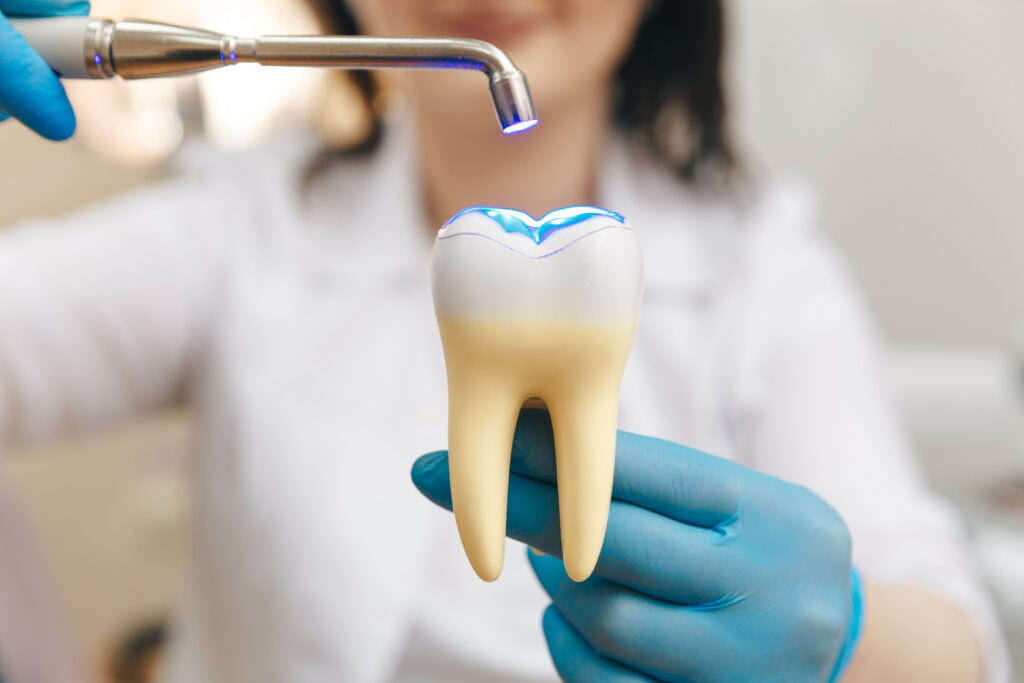
An inlay fits within the cusps of a tooth, sitting in the center of the chewing surface where decay or an old filling has compromised the structure. Unlike a standard filling that is packed into the tooth in a soft state and hardens in place, an inlay is fabricated in a laboratory from porcelain or zirconia and then bonded into the prepared space.
Because inlays are made outside the mouth with precise measurements, the fit is typically more accurate than a direct filling. The material is also harder and more wear-resistant, making inlays a strong choice for molars that take the full force of chewing. According to the National Institute of Dental and Craniofacial Research, tooth decay is one of the most common chronic diseases in adults, and inlays offer a durable option when decay has progressed beyond what a simple filling can address.
What an Onlay Restores
An onlay extends farther than an inlay, covering one or more of the raised cusps at the edges of the tooth rather than just the central chewing surface. When decay or fracture has involved a cusp but the remaining tooth structure is still healthy, an onlay can rebuild what was lost while leaving the sound portions of the tooth intact.
The distinction matters clinically because a full dental crown caps the entire tooth, requiring significant reduction of the surrounding structure. An onlay preserves more of what’s already there. When a cusp is damaged but the tooth is otherwise strong, an onlay is often the more conservative choice.
Porcelain and Zirconia: Material Options
At Coastal Cosmetic and Family Dentistry, inlays and onlays are fabricated from tooth-colored porcelain or zirconia. Both materials blend naturally with the surrounding teeth and are free of the metal components found in older gold or amalgam restorations.
Porcelain offers excellent aesthetics, particularly for teeth visible when smiling. Zirconia is exceptionally hard and well-suited to high-load areas at the back of the mouth. Our team selects the material based on the location of the tooth, the extent of the restoration, and your personal goals for how your smile looks and performs.
Inlays and Onlays Versus Fillings and Crowns
The choice between a filling, an inlay or onlay, and a crown depends on how much tooth structure remains and how much stress the restoration will face. Here’s a simple way to think about the range:
Ready to Schedule Your Visit?
Now Accepting New Hygiene Patients
- Fillings work well for small to moderate areas of decay that leave the cusps intact
- Inlays fit between the cusps when a filling would be too large to hold up reliably
- Onlays cover one or more cusps when the cusp itself has been compromised
- Crowns cap the entire tooth when damage is too extensive for a partial restoration
Each step up the scale removes more existing tooth structure to make room for the restoration. Because inlays and onlays preserve more than a crown while providing more strength than a filling, they occupy a practical middle ground for a range of tooth conditions.
What to Expect During Treatment
Placing an inlay or onlay typically requires two appointments. At the first, we remove the damaged or decayed area, shape the tooth to receive the restoration, and take impressions that go to the dental laboratory. A temporary restoration protects the tooth in the meantime.
At the second appointment, we bond the finished inlay or onlay into place, check the bite, and make any needed adjustments. The restoration is cemented with a strong dental adhesive, and once set, it functions and feels like a natural part of the tooth.
If your goals extend beyond restoring individual teeth to improving the overall appearance of your smile, we can also discuss how restorations like these fit into a broader smile makeover plan.
Schedule a Visit at Coastal Cosmetic and Family Dentistry
If a tooth has been repaired multiple times with large fillings, or if you’ve been told a crown may be in your future, an inlay or onlay is worth asking about. In many cases, it’s the right answer for preserving more of the natural tooth while delivering durable, aesthetic results.
Contact our Pensacola office through our contact page to schedule an evaluation. Our team will take a close look at what each tooth needs and walk you through which restoration makes the most sense.
How long do inlays and onlays last?
With proper care, porcelain and zirconia inlays and onlays can last 20 years or more. Routine cleanings, avoiding habits like chewing ice, and wearing a nightguard if you grind all extend their lifespan.
Are inlays and onlays covered by insurance?
Coverage varies by plan. Most dental insurance treats inlays and onlays as a restorative procedure, though the percentage covered depends on your specific benefits. Our team can provide a cost estimate before treatment begins so there are no surprises.
Is the procedure painful?
The tooth is numbed before any preparation work, so discomfort during the appointment is minimal. Some sensitivity is normal in the days following placement, particularly to temperature, but this typically resolves as the tooth settles.
What’s the difference between an inlay and a filling?
A filling is placed directly in the tooth in a pliable state and hardens in place. An inlay is fabricated in a laboratory from solid porcelain or zirconia and bonded in. Inlays are more durable, fit more precisely, and are better suited to larger areas of decay where a direct filling might flex or fracture over time.
Ready to Schedule Your Visit?
Now Accepting New Hygiene Patients