Losing a tooth changes more than your smile. It affects the way you chew, the way you speak, and even the structure of your jaw over time. Two of the most trusted solutions for a missing tooth are single tooth implants and implant-supported bridges, and knowing the difference between them can help you choose the path that best supports your long-term oral health.
At Coastal Cosmetic & Family Dentistry in Pensacola, Dr. William Rolfe and Dr. Emily Hébert help patients work through these decisions with thorough diagnostics and honest conversation. Whether you’re replacing one tooth or several, their team is committed to finding the solution that fits your anatomy, your goals, and your life. Learn more about the full range of dental implants services before your visit.
What Is a Single Tooth Implant?
A single tooth implant replaces one missing tooth from root to crown. A small titanium post is surgically placed into the jawbone, where it fuses with the surrounding bone through a process called osseointegration. Once healed, a custom crown is attached to the post, creating a restoration that looks, feels, and functions like a natural tooth.
Why individual implants stand apart: One of the biggest advantages of a single implant is that it stands completely on its own. It does not rely on neighboring teeth for support, which means those teeth remain fully intact and untouched. Single implants also stimulate the jawbone the way a natural root would, helping prevent the bone loss that commonly follows tooth loss. According to Cleveland Clinic, dental implants tend to last longer and look more natural than traditional bridges while also reducing decay risk in surrounding teeth.
Who makes a good candidate: Single tooth implants work best for patients who are missing one tooth, have sufficient jawbone density to support the implant, and are in good overall health. If bone loss has already occurred, a bone graft may be needed before placement, which can extend the overall treatment timeline. A full evaluation at Coastal Cosmetic & Family Dentistry will confirm whether your bone volume and tissue health support moving forward.
What Is an Implant-Supported Bridge?
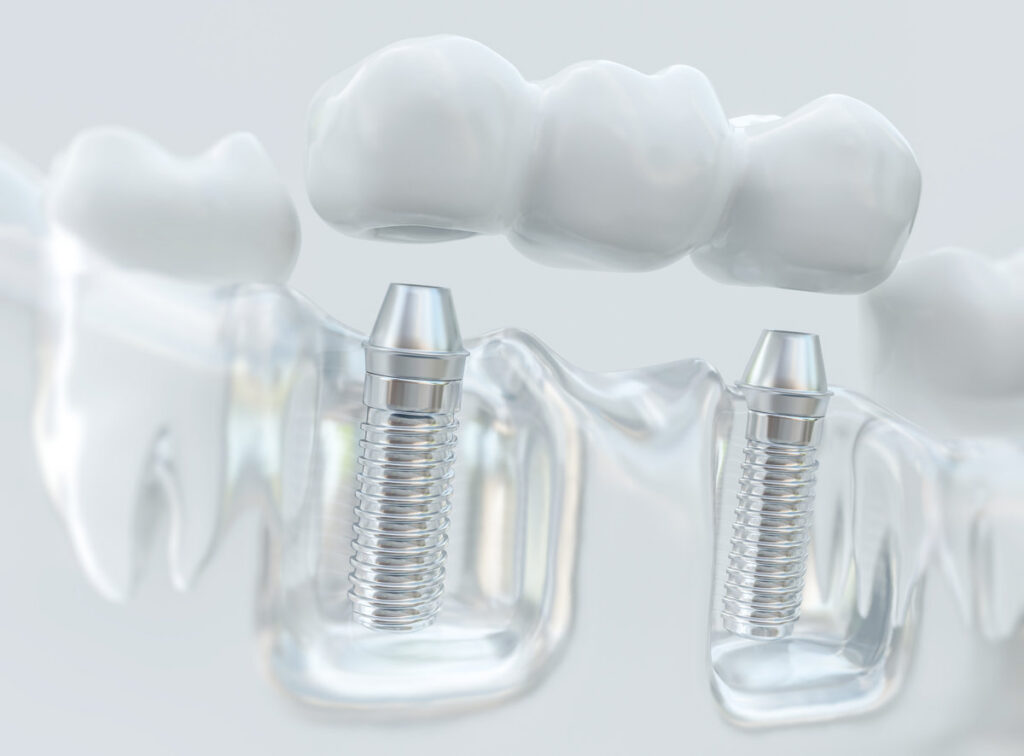
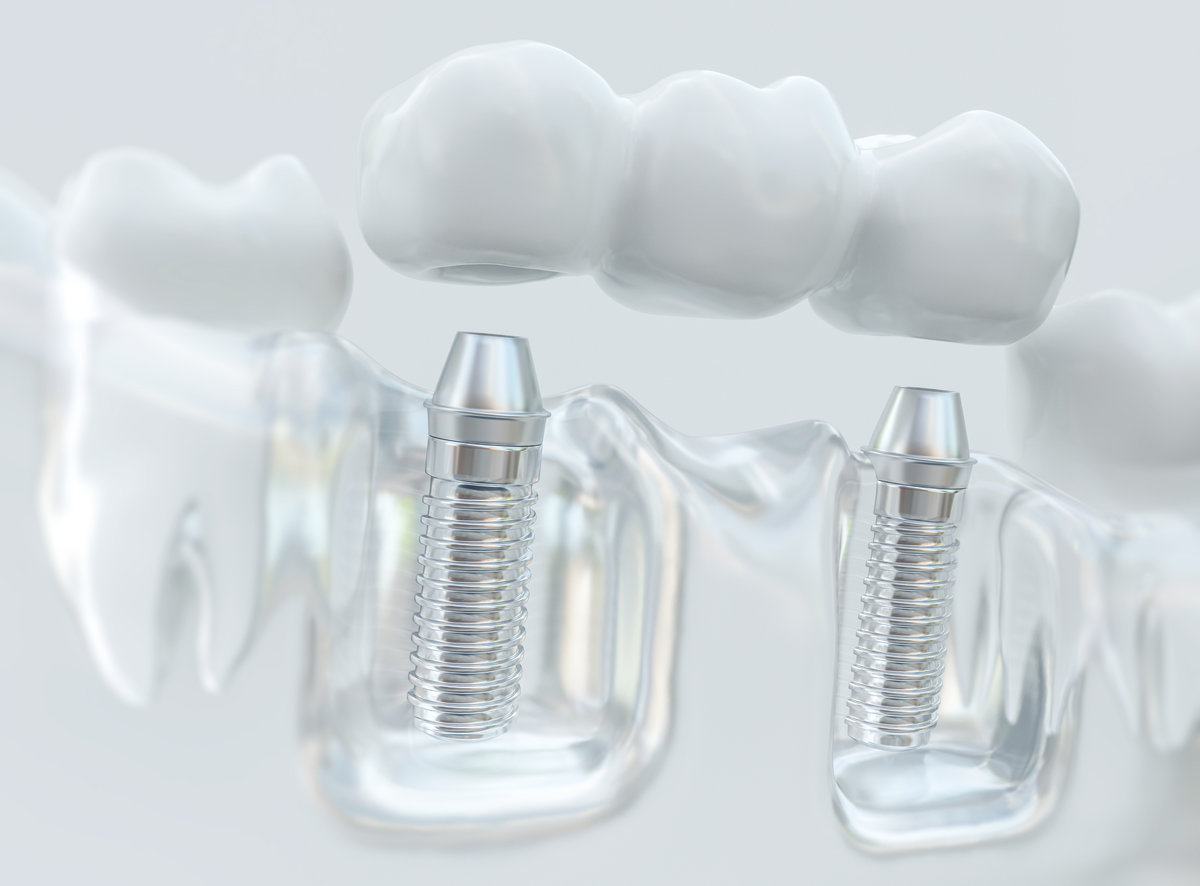
An implant-supported bridge is designed to replace two or more consecutive missing teeth. Rather than relying on natural teeth as anchor points, this type of bridge uses implants placed at either end of the gap to support the restoration. The bridge spans the space between the implants, filling in the missing teeth without requiring adjacent teeth to be filed down or altered in any way.
When a bridge is the practical choice: If you’re missing more than one tooth in a row, an implant-supported bridge may be both the more practical and more cost-effective approach. Rather than placing a separate implant for each missing tooth, two strategically placed implants can support an entire span of replacement teeth. The result still delivers excellent stability, bone preservation at the implant sites, and a natural-looking outcome.
What to consider for the long term: Because the bridge spans multiple teeth, the area beneath the pontic, the false tooth in the middle, does not receive the same bone stimulation as the implant sites. This difference is worth discussing when evaluating long-term jaw health. Our team will review your X-rays, bone structure, and full oral health history to give you a clear picture of what each option looks like over time.
How to Choose Between the Two
The right choice comes down to how many teeth are missing, the condition of your jawbone, your budget, and your long-term goals. The following factors most often guide this decision:
- Number of missing teeth: Single implants are ideal for one missing tooth, while implant-supported bridges are better suited for two or more consecutive gaps.
- Bone health: Adequate bone volume is required for either option, though individual implants require healthy bone at each separate placement site.
- Budget: Implant-supported bridges can be a more economical approach when replacing multiple teeth compared to placing individual implants for each space.
- Long-term bone preservation: Both options provide stability, but individual implants deliver full bone stimulation at every site, which may benefit overall jaw structure over time.
Your situation may lean clearly toward one option, or the trade-offs may warrant a deeper conversation. A consultation with Dr. Rolfe or Dr. Hébert will give you a clear recommendation based on your specific anatomy and goals.
Frequently Asked Questions About Implants and Bridges
How do I know if I have enough bone for a dental implant?
Bone density is evaluated through dental X-rays or a cone beam CT scan during your consultation. If bone loss has occurred since your tooth was removed, you may still be a candidate after a bone grafting procedure. Your dentist will assess your bone volume and quality at your initial visit and explain what the process would look like for your specific situation.
How long does the implant process take from start to finish?
The timeline varies depending on whether bone grafting is needed and how quickly osseointegration occurs. For most patients, the full process from implant placement to final crown takes between three and six months. Your dentist will outline a realistic timeline during your consultation based on your treatment plan and healing history.
Does dental insurance cover implants or implant-supported bridges?
Coverage varies widely by plan. Some dental insurance policies cover a portion of the crown or bridge component, while others treat implants as a cosmetic procedure. Our team can help you review your coverage and, if needed, discuss flexible financing options to make treatment more accessible.
Can I eat normally while my implant is healing?
During the healing period after implant placement, a soft diet is typically recommended to protect the surgical site and support proper osseointegration. Once the implant has fully integrated and the final crown is placed, most patients return to eating normally without restriction. Your dentist will provide specific dietary guidance based on your procedure and healing progress.
Schedule Your Implant Consultation at Coastal Cosmetic & Family Dentistry
Choosing between a single tooth implant and an implant-supported bridge is a significant decision, and it benefits from a personalized, thorough evaluation. At Coastal Cosmetic & Family Dentistry, we combine detailed diagnostics with patient-centered conversations to help you make an informed choice. Our team is also experienced in full smile makeovers and comprehensive restorative dentistry for patients with broader needs.
For patients who may not be implant candidates, we also offer traditional dental bridges. Whatever your situation, we will take the time to walk you through every option clearly and honestly. Request an appointment today and take the first step toward a complete, confident smile.