
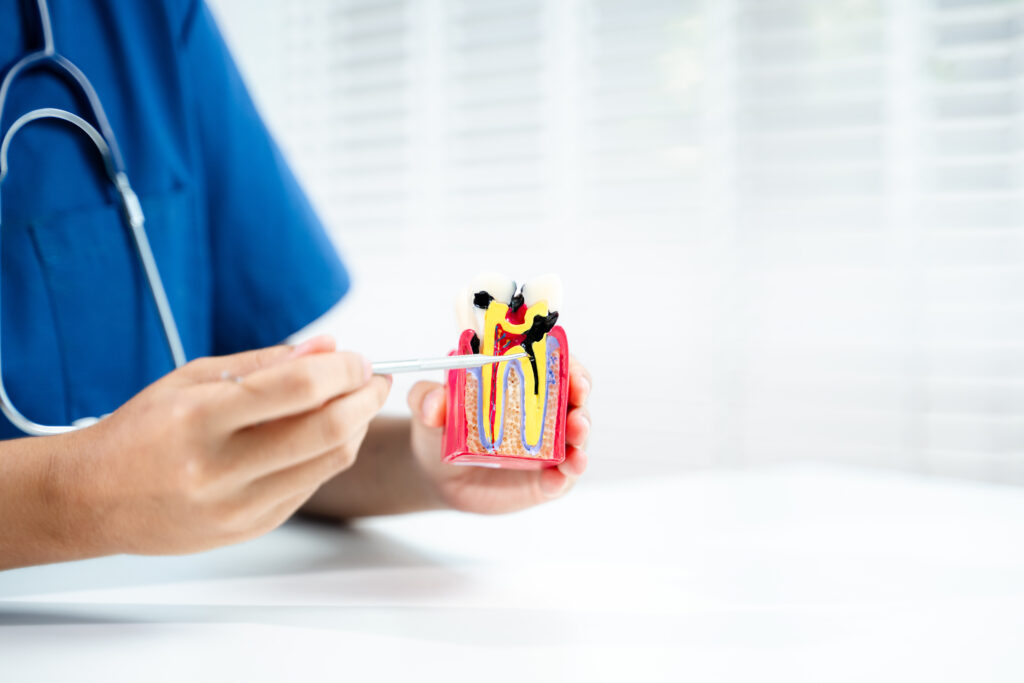
Root canal treatment carries a reputation for being one of the most dreaded dental procedures, and that reputation has very little to do with what actually happens in the chair. Most patients who have been through a modern root canal report that it felt no worse than getting a filling. The fear comes from a combination of outdated stories and a fundamental misunderstanding of what the procedure involves.
At Coastal Cosmetic and Family Dentistry in Pensacola, Drs. Matthew Bishop and Emily Hébert approach root canal treatment with the same priority they apply to every procedure: making sure you’re comfortable, informed, and confident before anything begins. Understanding the real picture can go a long way toward easing the anxiety before your appointment.
Understanding the True Source of Discomfort
The pain people associate with a root canal is almost always the pain that led to needing one in the first place. A severely infected or abscessed tooth is genuinely painful. Inflamed pulp tissue creates pressure inside a sealed environment with nowhere to go. By the time most patients are referred for root canal treatment, they’ve been dealing with that discomfort for days.
The procedure itself removes the source of the pain. Dentists decompress the infection, clear the inflamed tissue, and seal the canal. Most patients describe significant relief in the hours and days following the appointment, not increased discomfort.
Modern Anesthesia Makes All the Difference
Root canals performed decades ago were a different experience, partly because anesthetic options and delivery techniques were far more limited. Contemporary local anesthesia is highly effective, and there are multiple formulations and delivery approaches available for patients who are difficult to numb or who have had inadequate anesthesia in the past.
Our team takes time to confirm that you’re fully numb before any instrumentation begins. If you feel anything at any point, we stop and add more anesthetic. You are in control of that process, and we don’t rush it.
The Myth of Systemic Illness
A widely circulated claim holds that root canals cause or contribute to systemic disease by trapping bacteria in the treated tooth. This theory originates from research conducted over a century ago that has since been thoroughly discredited. A 2019 review published in PMC via the National Institutes of Health found no credible evidence linking properly performed root canal treatment to any systemic health condition.
Major dental and medical organizations, including the American Association of Endodontists, have addressed this claim directly. Leaving an infected tooth untreated poses far greater systemic risks than treating it. Oral infections can spread to surrounding bone and, in serious cases, to other regions of the body.
Extraction Versus Preservation
Some patients ask whether they should simply have the tooth pulled rather than go through root canal treatment. Extraction removes the immediate problem, but it introduces a new one: a gap in the arch that, over time, leads to neighboring teeth drifting, bite changes, and bone loss at the extraction site.
Replacing a missing tooth with a crown-topped implant or bridge involves more total treatment time and cost than preserving the original tooth. Root canal treatment, followed by a crown to protect the treated tooth, is almost always the more conservative path when the tooth can be saved. Our team will give you an honest assessment of whether preservation is realistic in your specific situation.
Ready to Schedule Your Visit?
Now Accepting New Hygiene Patients
Recovery Time Misconceptions
Many patients expect to be sidelined for days after a root canal. Most people return to normal activities the same day or the next. Mild soreness around the treated tooth is common for a few days as the inflammation resolves, and over-the-counter anti-inflammatory medication typically handles it well.
What extends recovery, when it does, is usually the severity of the original infection rather than the procedure itself. A tooth that was severely infected before treatment may take longer to settle. Your dentist will give you a realistic expectation based on your specific situation at the time of the appointment.
Advanced Diagnostic Tools
Accurate diagnosis before treatment begins is one of the most important factors in both the outcome and the comfort of root canal therapy. Digital X-rays allow our team to evaluate the canal anatomy, the extent of infection, and the condition of surrounding bone before the procedure starts. The more precisely we understand the tooth’s structure going in, the more efficiently the treatment proceeds.
For complex cases, cone beam CT imaging provides three-dimensional views that reveal canal configurations not visible on a standard X-ray. Dr. Bishop and Dr. Hébert use this level of detail to plan treatment thoroughly before picking up an instrument.
The Step-by-Step Treatment Experience
Knowing what actually happens during a root canal removes much of the mystery that feeds anxiety. The basic sequence involves:
- Anesthesia administered and confirmed before any work begins
- A small opening made through the crown of the tooth to access the canals
- Infected or inflamed pulp tissue removed with fine instruments
- Canals cleaned, shaped, and irrigated to remove bacteria
- Canals filled and sealed with a biocompatible material
- A temporary or permanent restoration placed to close the access point
Most root canals are completed in one or two appointments depending on the severity of the case. A crown is typically recommended afterward to protect the tooth from fracture, since the treated tooth no longer has a blood supply and can become more brittle over time.
Schedule a Visit at Coastal Cosmetic and Family Dentistry
If you’ve been putting off a root canal because of fear, or if you’re dealing with tooth pain and aren’t sure whether you need one, the right next step is a conversation with our team. Drs. Bishop and Hébert will take a look, tell you exactly what they see, and walk you through what treatment would involve before any decisions are made.
Reach out through our contact page to schedule an appointment in Pensacola. Most patients are surprised by how different the experience is from what they expected.
Does a root canal hurt?
The procedure itself is performed under local anesthesia and most patients report feeling pressure rather than pain. The tooth is numbed before any work begins, and anesthetic is added if needed at any point. Most patients are surprised by how manageable the experience is compared to what they expected.
How do I know if I need a root canal?
Common signs include prolonged sensitivity to heat or cold, spontaneous throbbing pain, swelling near the tooth, tenderness when biting, or darkening of the tooth. A definitive diagnosis requires an X-ray and clinical exam. Not all tooth pain points to a root canal, and we won’t recommend one unless it’s necessary.
How long does a root canal take?
Most root canals are completed in one to two appointments of about 60 to 90 minutes each. Cases involving more complex canal anatomy or severe infection may take longer. Your dentist will give you a specific estimate after reviewing your X-rays.
What happens after the root canal is done?
A crown is typically placed over the treated tooth to protect it from fracture. The treated tooth does not have a live pulp anymore and can become more brittle over time, so the crown is a standard part of the long-term care plan. Most patients return to normal activities the same day or the following day.
Ready to Schedule Your Visit?
Now Accepting New Hygiene Patients